


Onet Puzzle - Tile Match Game
4.65.02K Reviews
App Specs
- Version
- 2.23.0
- Updated On
- License
- Free
- Downloads
- 50,000,000+
- Developer
- Infinite Joy Ltd.
- Categories
- Board
- Platform
- Android
Screenshots
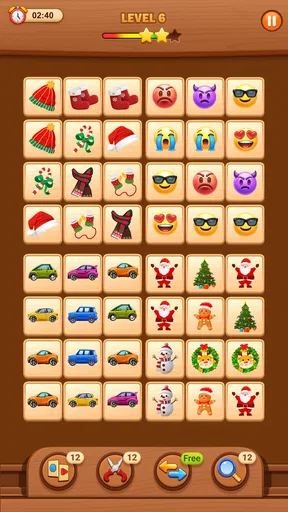
 Analysis by AppCompare
I first approached Onet Puzzle - Tile Match Game as a low-pressure way to fill a spare moment, and that remains its clearest appeal. It is a board game built around finding matching pictures and clearing them from the screen, but the route between two tiles matters as much as the match itself. That small rule gives a familiar idea a more thoughtful rhythm: I’m not just spotting pairs, I’m checking whether the board lets me connect them.
If you are installing it for the first time, there is no need to prepare or learn a long set of rules. The opening idea is easy to grasp, and the first satisfying moment comes when you notice a pair, trace a valid route, and see both tiles disappear. I find that gentle start reassuring. It lets you understand the basic decision before the puzzle asks you to think further ahead.
What to expect from a tile-matching session
The game comes from Infinite Joy Ltd. and has the light, pick-up-and-play feel I want from a casual board puzzle. Its central task is simple to explain, but the limited path between matching tiles means that an obvious pair may not always be the useful one to clear first. As open spaces change, new routes can become available, so each move can affect what I can reach next.
That makes the game a better fit for short, attentive breaks than for playing on autopilot. I can make progress while waiting for a drink or winding down at home, but I still need to look across the whole board rather than tap the first two pictures that match. The appeal is in that middle ground: it asks for a little focus without feeling like a serious study session.
The first useful habit is to scan before making a move. I look for pairs that are easy to connect, then check whether removing them might open a path for another match. This is not a complicated strategy, and you do not have to plan every move, but a brief pause can prevent the board from feeling needlessly tangled later. When I get stuck, I try looking around the edges and through the spaces already cleared instead of focusing only on the busiest area.
Getting started and finding your first success
Onet Puzzle is free to download and play, with optional in-app purchases listed from $0.99 to $49.99 per item. I would begin by playing naturally rather than buying anything: the basic matching rule is enough to tell you whether this style suits you. If a purchase prompt appears, it is worth taking a moment to decide whether you actually want an extra, rather than treating spending as part of learning the game.
For a first session, I recommend making one deliberate match at a time. Find two identical tiles, trace a clear route between them within the game’s rule, and check what that removal does to the remaining layout. That is a more useful first success than rushing through several matches, because it shows how clearing a pair can change the choices available afterward. If a connection does not work, I slow down and inspect the intervening spaces and turns instead of repeatedly tapping the same pair.
Worth Reading Before You Choose

Switching to Android Auto Means Rethinking Your Driving Routine

Google Calendar Makes a Crowded Week Easier to Manage

Baby Panda World Brings Quick Play to Modern Phones, but Its Game Library Feels Busy

ESPN’s Live Game View Makes Following Close Games Easier

QuizzLand Review: A Good Fit for Short Trivia Breaks, Not Every Player

Basketball Stars: Multiplayer Is Fast, but Can It Recover When Matches Go Wrong?
It is rated Everyone, so its stated age classification is broad, and its uncomplicated premise is easy to explain to a new player. That does not mean every level will feel effortless: the same matching rule can become demanding when the board offers fewer convenient routes. I would introduce it as a picture-matching puzzle, then let the player discover the path restriction through a few moves.
How it fits into an everyday routine
A realistic use for me is a short pause between tasks: I open the game, play until I reach a natural stopping point, then return to what I was doing. The board gives that pause a clear focus, unlike scrolling through an endless feed, but it is still easy to let one more puzzle turn a brief break into a longer one. If you are trying to keep sessions short, choose your stopping point before you start.
It also suits people who enjoy visual sorting and pattern recognition more than reflex challenges. There is no need to learn complicated controls to understand the core play, and the puzzle asks you to observe rather than react quickly. On the other hand, if you want a story, a competitive match, or a game built around fast action, this is not the one I would reach for. Its pleasure comes from finding a route and making space, not from a dramatic payoff or a race against someone else.
Compared with the usual alternatives, it sits between basic matching games and heavier logic puzzles. A simple pair-matching game may ask only whether two pictures are alike; here, the path rule adds a spatial decision. A traditional number puzzle can demand longer chains of deduction, while this game is easier to enter and more visual. That compromise is its strength, though players who want deep, steadily escalating strategy may find the underlying action too repetitive over time.
When a level feels confusing
The most common point of confusion is seeing a matching pair and assuming it must be connectable. Similar pictures are only part of the test; the route also needs to be clear and respect the limited number of straight segments. When a pair seems stubborn, I check for another open path or clear a different pair that could change the layout. Treating a failed attempt as a clue about the board is more helpful than tapping faster.
Difficulty can also feel uneven. A board that looks straightforward may become awkward once the convenient routes are gone, and a sudden jump in challenge can interrupt a relaxed session. I would not read that as a sign that you have missed a complicated tutorial; often the better response is to slow down, scan the whole board, and consider which match creates the most useful opening. If you prefer a smooth, predictable difficulty curve, that occasional friction may bother you.
Ads are another possible interruption. I have found that they can make a free game feel less seamless, especially when I only meant to play for a moment. The free-to-play format is easy to try without committing money, but it is sensible to expect that the experience may include advertising and to decide whether that trade-off works for you. Optional purchases do not change the basic fact that the game is built around matching and routing tiles.
Who will enjoy it, and who may want something else
I would recommend it to someone who likes short visual puzzles, wants a gentle mental nudge during downtime, or enjoys clearing a board one considered move at a time. It is especially approachable if you want to start playing quickly rather than spend your first session learning a control scheme or a long sequence of systems. The title is also a reasonable choice to try with another person nearby: you can point out possible matches together, even if the decision-making remains simple.
I would skip it if repeated matching feels dull to you, if ads are a deal-breaker, or if you need every level to introduce a substantially different mechanic. It is also not my pick when I want a demanding logic challenge with lots of planning depth. The route restriction adds a worthwhile layer, but it does not transform the basic loop into a different genre. Knowing that beforehand helps set fair expectations.
A good way to continue after the first few boards
Once the rules feel familiar, try changing your approach rather than simply moving faster. Before clearing an easy pair, glance at the more crowded parts of the board and ask whether keeping a tile in place could preserve a useful route. Then compare that with the benefit of opening space now. This small habit makes the puzzle feel more deliberate, and it gives you a way to respond when a level becomes less obvious without needing to guess.
If you are deciding whether to keep it installed, give it a few sessions in different moods. It works well when you have enough attention to scan a board but do not want to commit to a large task. It may be less satisfying when you are tired and want something completely passive, because even a calm-looking screen still asks you to make choices. That distinction is useful: the game is relaxing in pace, not mindless in play.
The current release is version 2.21.0, and it requires Android 8.0 or later. It has a 4.7 average from around 118,000 ratings, with more than 50 million installs. Those figures suggest that its approachable tile puzzle has found a broad audience, but they are not a promise that every player will enjoy the repeated matching loop. I would use them as context, then make the decision based on whether the route-based rule sounds satisfying to you.
For me, the strongest reason to try it is that a tiny rule changes how I look at a familiar board. I begin by spotting pictures, but I stay engaged by considering which clear path is available and what a removal might open next. The interruptions and occasional difficulty bumps keep it from being a perfect fit for every break, yet the basic play is easy to understand and satisfying when a cramped board finally gives way.
Diving into the Gameplay
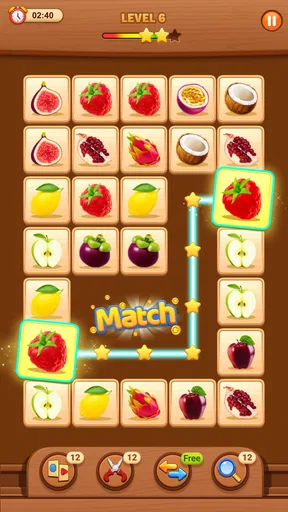
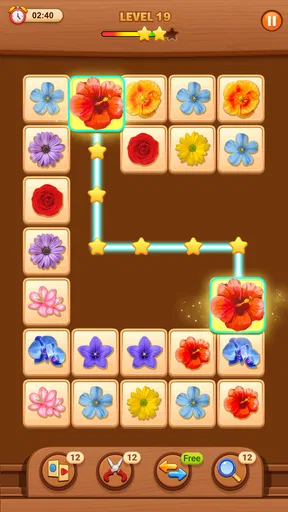
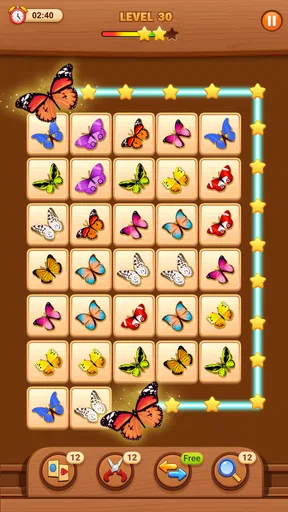
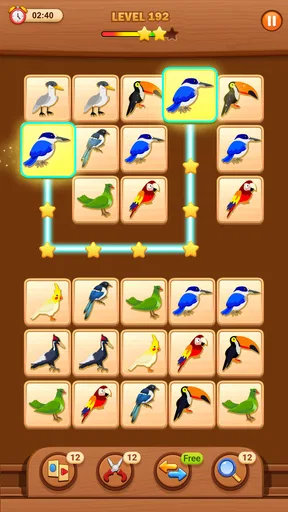
The essence of Onet Puzzle is pretty straightforward: you match pairs of tiles with the same picture. But here's the kicker – you can only link them if there's a clear path between them, no more than three straight lines. Sounds simple, right? Yet, as you progress, the game cleverly ramps up the challenge, keeping you on your toes.
This unique mechanic makes the game both addictive and rewarding. Each level feels like a mini brain workout, perfect for those moments when you want to unwind without turning your brain off entirely. It's like a jigsaw puzzle meets Sudoku, with a splash of color and whimsy.
Design and Aesthetics
One of the first things you'll notice about Onet Puzzle is its vibrant and clean design. The tiles are beautifully illustrated, with a variety of themes that keep things visually interesting. From fruits and animals to everyday objects, the diversity adds to the fun, ensuring you never get bored of looking at the same images over and over.
The user interface is intuitive and user-friendly, which means you can dive right in without a steep learning curve. It’s a game that feels welcoming, whether you’re a seasoned gamer or just someone looking to kill a few minutes.
Why You'll Love It
Let's talk about why this game has become a staple on my phone. First off, the sheer variety of levels keeps the game fresh. There's always a new challenge waiting for you, and the satisfaction of clearing a tough level is real.
Moreover, the game is incredibly accessible. You can pick it up for a quick session during your lunch break or delve into it for hours on a lazy Sunday. It’s versatile like that. Plus, the game is free to play, with optional in-app purchases if you feel like enhancing your experience.
Room for Improvement
While I genuinely enjoy Onet Puzzle, there are a couple of areas that could use a little polish. Occasionally, ads can be a bit intrusive. It's understandable – free apps need to make revenue somehow – but a slightly smoother integration would enhance the overall experience.
Another minor gripe is the difficulty spike that can occur unexpectedly. Some levels jump from leisurely to downright challenging, which might be frustrating for some players. A more gradual increase in difficulty would be a welcome tweak.
The Final Verdict
In the grand scheme of mobile games, Onet Puzzle - Tile Match Game is a standout choice for anyone who appreciates a blend of relaxation and mental challenge. Its charming design, engaging gameplay, and accessibility make it a must-try.
Whether you're a casual gamer or someone seeking a bit of brain exercise, this game has something to offer. So why not give it a shot? You might just find yourself hooked like I am!
Ready to dive into the world of matching tiles? Download Onet Puzzle now and start your journey!
Pros
- Simple and intuitive interface.
- Engaging tile-matching mechanics.
- Relaxing
- stress-free gameplay.
- Frequent updates with new levels.
- Supports offline play.
Cons
- Ads can be intrusive.
- Limited customization options.
- Repetitive sound effects.
- In-app purchases may be costly.
- No multiplayer mode.
FAQs for Onet Puzzle - Tile Match Game
What is Onet Puzzle - Tile Match Game?
Onet Puzzle - Tile Match Game is a classic tile-matching puzzle game where players connect pairs of matching tiles to clear the board. The game offers various levels of difficulty and challenges, making it ideal for players who enjoy strategic thinking and solving puzzles. It's available on both Android and iOS platforms.
How do you play Onet Puzzle - Tile Match Game?
To play Onet Puzzle, you must connect two identical tiles with a line that makes no more than three turns. The goal is to clear all tiles from the board within the time limit. The game increases in complexity with each level, requiring strategic thinking and quick reflexes to progress.
Is Onet Puzzle suitable for all age groups?
Yes, Onet Puzzle is designed to be accessible and enjoyable for players of all ages. The intuitive interface and progressively challenging levels make it suitable for both younger players and adults. However, younger children might need some guidance to understand the gameplay mechanics initially.
Are there any in-app purchases in Onet Puzzle?
Onet Puzzle features optional in-app purchases that allow players to buy hints, remove ads, or unlock additional content. While the game is free to play, these purchases can enhance the gaming experience by providing helpful tools or an ad-free environment, especially for those who play frequently.
Does Onet Puzzle require an internet connection to play?
Onet Puzzle can be played offline, making it a great option for those who want to enjoy the game without an internet connection. However, some features, like in-app purchases or leaderboard rankings, will require an internet connection to function properly.


